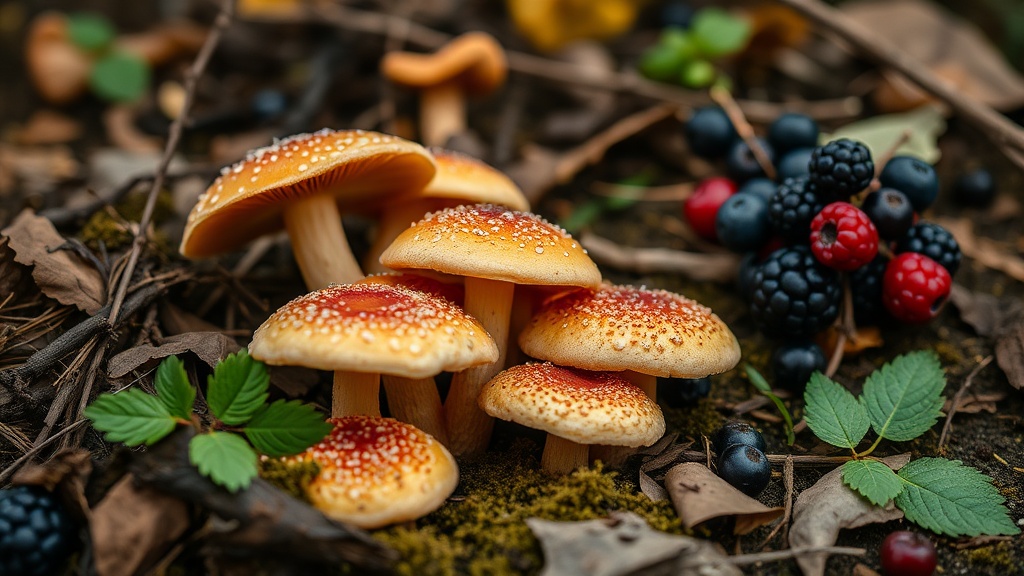
Finding the Best Local Wild Mushrooms and Berries

Most people assume that foraging for wild edibles in Northern Ontario is either too dangerous for the average person or that you need a PhD in botany to do it safely. That’s a misconception. While you definitely shouldn't guess when it comes to fungi, foraging for berries and certain mushrooms is a practical, rewarding way to connect with the Algoma District's natural resources. This guide covers the specific species you'll find around Elliot Lake, how to identify them, and the safety protocols you must follow to avoid a trip to the ER.
What Are the Most Common Edible Berries in Northern Ontario?
The most common edible berries you'll encounter near Elliot Lake are wild blueberries, raspberries, and staghorn sumac.
Blueberries are the heavy hitters here. If you head into the brush during a warm July or August, you'll find low-bush blueberries everywhere. They aren't as large as the ones you buy at the grocery store, but the flavor is much more intense. Raspberries also appear in the late summer, often clinging to thickets along sun-drenched edges of trails. They're much more delicate than the cultivated versions, so handle them with care—one wrong move and your harvest is a mushy mess.
Then there's the staghorn sumac. Most people see the bright red clusters and think "poison," but they're actually a great source of Vitamin C. You can make a refreshing "red drink" by soaking the berries in cold water. Just make sure you're looking at the staghorn variety, not the toxic look-alikes.
Here is a quick breakdown of what to look for:
- Blueberries: Small, blue/purple, grows on low-lying shrubs.
- Raspberries: Red or dark fruit, grows on thorny canes.
- Blue Honeysuckle: Often found in the wild, slightly sweet and tart.
- Wild Strawberry: Tiny, much smaller than store-bought, but incredibly sweet.
If you're out in the bush, remember that berries are a seasonal game. If you're looking for a great way to spend an afternoon before the temperature drops, check out my previous post on things locals actually do in Elliot Lake. It's a great way to get outdoors before the snow hits.
How Do I Identify Safe Mushrooms Without a Degree?
The only way to safely identify mushrooms is by using multiple reliable sources and never eating anything unless you are 100% certain of its identity.
I'll be blunt: do not eat a mushroom just because it looks "good" or "delicious" in a photo. In the Northern Ontario woods, some of the most beautiful mushrooms are the most lethal. For instance, the Amanita species can look striking, but they are incredibly dangerous. Always cross-reference your finds with a physical field guide or a verified digital database like the Wikipedia page for Mycology or a regional Ontario fungus guide.
That said, there are some "beginner-friendly" mushrooms that are relatively easy to spot if you know what to look for. The Chanterelle is a favorite among locals because of its bright yellow color and distinct, apricot-like scent. They don't have gills like most mushrooms; instead, they have ridges that run down the stem. It's a subtle detail, but it's a huge giveaway.
Another one to watch for is the Morel. They usually pop up in the spring when the ground is damp and the temperature starts to climb. Morels have a distinct, honeycomb-like cap. They are highly sought after, and honestly, they're worth the early morning hike.
A quick tip: If you're ever unsure, don't risk it. One mistake can be permanent. Use a magnifying glass to check the underside of the cap. Is it gills? Is it pores? Is it teeth? Knowing these distinctions is the first step to moving past the "beginner" stage.
Common Mushroom Characteristics Comparison
| Mushroom Type | Key Feature | Typical Habitat |
|---|---|---|
| Chanterelle | False gills (ridges) | Mossy, coniferous forests |
| Morel | ||
| Porcini (Boletus) | Pores instead of gills | Near pine trees |
Note: The table above is a simplified guide. Always use a professional field guide for definitive identification.
Where Can I Go Foraging Near Elliot Lake?
You can find many edible wild plants and fungi in the crown lands and managed forest areas surrounding the Elliot Lake area.
Most of the best spots are found on the edges of the bush—where the forest meets a clearing or a trail. This is where the sunlight hits the ground, allowing berries to thrive. If you're looking for mushrooms, you'll often find them near fallen logs or under the canopy of old-growth trees. The moisture levels in these areas are key. After a heavy rain, the forest "wakes up," and that's when you'll see the most activity.
However, you need to be mindful of where you are walking. If you're on private property, always ask for permission first. Most of the areas around us are crown land, which makes it a bit more flexible, but there are still rules. For example, you shouldn't over-harvest. If you pick every single berry in a patch, there won't be any left for the birds or for next year's crop. It's a delicate balance.
If you're planning a long trek into the bush, make sure you're prepared for the terrain. The ground can be uneven and slippery, especially after a rainstorm. It's a good idea to check out my guide on preparing your vehicle for Northern Ontario—not because you're driving in snow right now, but because it emphasizes the importance of being prepared for the changing conditions of our local climate.
What Gear Do I Need for Foraging?
You don't need much, but a sturdy basket, a sharp knife, and a reliable identification book are the essentials.
Don't just throw things in a plastic bag. If you put warm, damp mushrooms in a plastic bag, they'll rot before you even get home. Use a wicker basket or a mesh bag. This allows for airflow, which is vital if you're planning on cooking them later. For berries, a shallow container is best to prevent crushing.
Here is a checklist of what to bring on your next outing:
- A Field Guide: A physical book is better than a phone because batteries die and screens are hard to read in the sun.
- Small Knife: Useful for cutting stems cleanly without damaging the mycelium (the "root" system) of the fungus.
- Small Basket: For breathability and easy carrying.
- Water: Staying hydrated is a given, especially if you're hiking through thick brush.
- Proper Footwear: You'll be walking on uneven, often damp ground.
It's also worth noting that you should always carry a small-scale first aid kit. Even if you're just looking for berries, a scrape or a twisted ankle can happen easily in the bush. The terrain around Elliot Lake isn't a manicured park—it's wild. Treat it with respect.
One more thing—be careful of the "look-alikes." There's a certain kind of thrill in finding something edible, but it's not worth the risk of a mistake. If a mushroom has a ring around the stem or a bulbous base, and you haven't studied it extensively, leave it alone. The same goes for berries; if the leaves look a certain way, make sure they aren't a toxic variety. The Ontario government resources often have great info on local flora and fauna safety that's worth a quick glance before you head out.
The more you practice, the more your eyes will adjust to the forest floor. You'll start to see the subtle colors and shapes that you used to miss. It's a slow process, but once you get the hang of it, the forest becomes a much more interesting place.
Steps
- 1
Research your local species
- 2
Gather the right tools
- 3
Practice safe harvesting techniques